Speaking Up Against Bullying: Autism, Safety, and Support
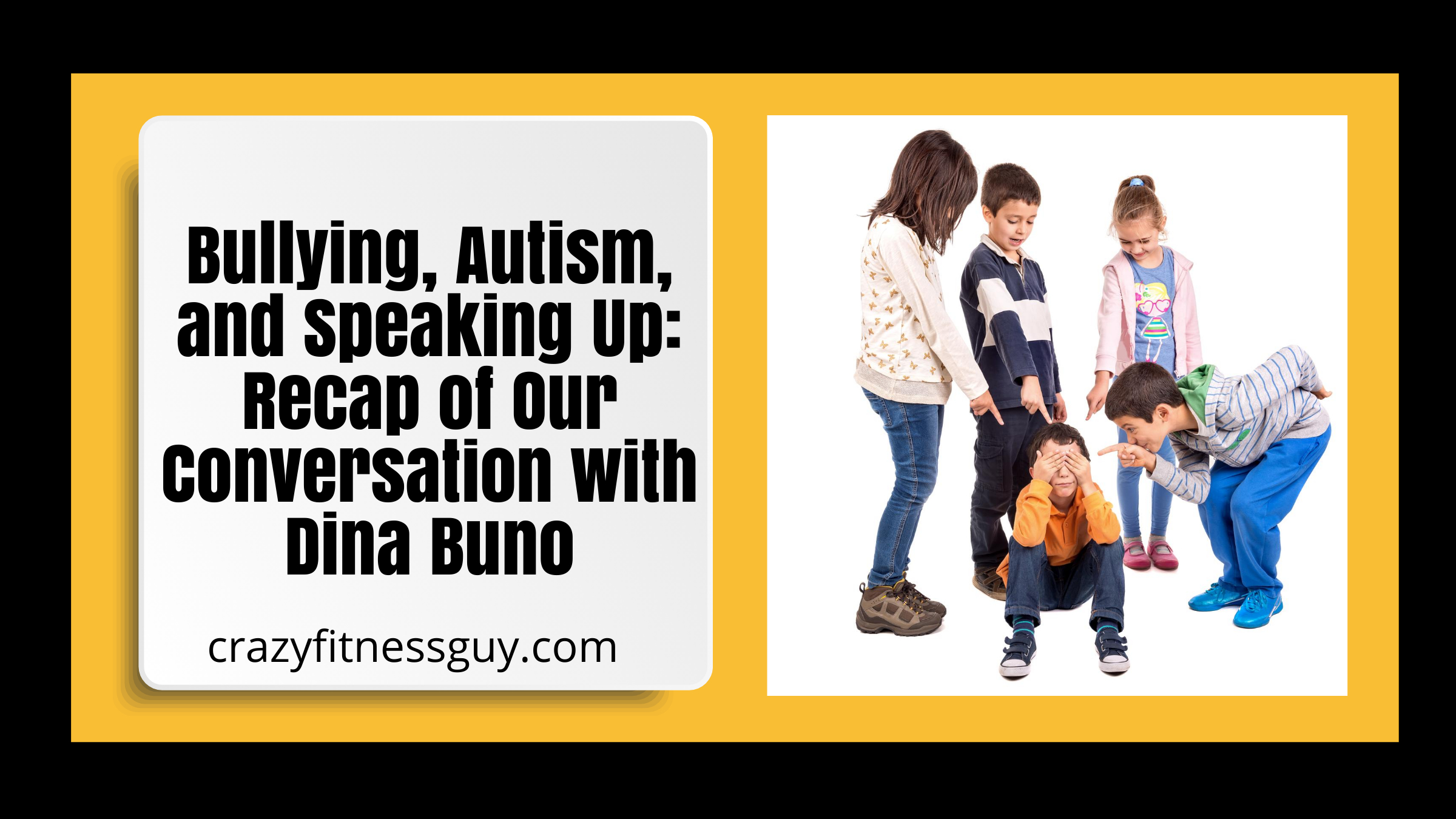
Bullying hits different when you are autistic or otherwise neurodivergent. It is not just “kids being kids,” especially when your brain is already juggling sensory overload, social confusion, and being treated like the odd one out. The usual “just ignore them” or “stand up for yourself” advice does not exactly account for delayed processing, shutdowns, or the fact that you might freeze when something awful happens.
In this episode of CrazyFitnessGuy, I sat down with Autism/Asperger’s advocate and creative thinker Dina Buno to talk honestly about what bullying really looks like, how it sticks with you, and what actually helps when the polished school posters and assemblies do not.
This post is a low‑stress recap of that conversation, so if you are autistic, raising an autistic kid, or just tired of generic anti‑bullying slogans, you can grab the main takeaways without rewatching the episode ten times. For the full conversation, you can still listen to or watch our episode, Bullying Prevention & Awareness: Dina Buno’s Powerful Advocacy Story, where we dig even deeper into her story and why prevention actually matters.
The Importance of Speaking Up Against Bullying
Speaking up against bullying is hard enough when you are neurotypical. When you are autistic, anxious, or already masking just to get through the day, it can feel impossible. You might worry no one will believe you, or that you will be seen as “too sensitive” or “overreacting.” Speaking up anyway matters, because it breaks that weird silence where everyone knows what is happening but pretends it is normal. It also lets trusted adults, friends, and allies actually do something besides shrug and say, “kids will be kids.”
When victims speak up, they can regain a sense of control and agency, and they send a clear message that bullying is not acceptable. Speaking up can alert adults, school officials, and community leaders to the problem and prompt them to take action. Bullying often thrives in environments where it is tolerated or ignored, and reporting incidents can help create a culture of accountability and prevention. When bystanders witness bullying and choose to speak out, they can disrupt the power dynamics and make it very clear that the behavior is not okay.
The Impact of Bullying: Why Prevention Matters
For autistic and neurodivergent people, bullying is not just a “rough patch.” It can turn school, work, or community spaces into places your nervous system never fully relaxes. That constant stress can show up as meltdowns, shutdowns, burnout, or “mystery” health issues that doctors cannot quite pin down.
Bullying has a profound and lasting impact on the physical, emotional, and psychological well‑being of its victims. It can lead to a range of negative consequences, including:
-
Mental health issues: Victims of bullying are at a higher risk of developing depression, anxiety, low self‑esteem, and suicidal thoughts. The constant stress and trauma of being targeted can disrupt their emotional regulation and coping mechanisms.
-
Academic problems: Bullying can interfere with a student’s ability to focus in school, complete assignments, and participate in class. Victims may experience a decline in their grades, increased absenteeism, and even drop out of school altogether.
-
Social isolation: Bullying can damage a victim’s social relationships and lead to feelings of loneliness and isolation. Victims may withdraw from their friends and family, avoid social situations, and struggle to form new connections.
-
Physical health issues: The stress of being bullied can show up as headaches, stomachaches, sleep disturbances, and weakened immune function. Chronic bullying can even contribute to long‑term health problems like cardiovascular disease.
Preventing bullying is essential to protect the health and well‑being of all students and to create a positive school climate. Prevention efforts should focus on educating students about bullying, promoting empathy and respect, and establishing clear policies and procedures for reporting and addressing incidents.
Dina Buno's Advocacy: A Story of Strength and Resilience
Dina Buno is a powerful voice in the fight against bullying. As an Autism/Asperger’s advocate, writer, and creative thinker, she brings a unique perspective to the issue, drawing on her own experiences of being bullied and her passion for helping others. In our episode, Bullying Prevention & Awareness: Dina Buno’s Powerful Advocacy Story, Dina shares her personal insights on why bullying is a serious issue that can affect anyone, anywhere. Her story highlights the importance of speaking up, supporting victims, and fostering safe, inclusive environments.
Dina’s advocacy work includes:
-
Sharing her personal story: Dina bravely shares her experiences of being bullied as a child and teenager, offering hope and validation to other victims.
-
Raising awareness: She speaks out about the different forms of bullying and the devastating impact it can have on individuals and communities.
-
Providing support: Dina offers guidance and resources to victims of bullying and their families, helping them navigate the mess that bullying creates.
-
Advocating for change: She works to create a more inclusive and accepting society where bullying is not tolerated.
Dina’s story is not about “being inspiring for the sake of it.” It is about an autistic adult telling the truth about what she went through, what still hurts, and what helped her keep going. When you hear someone like Dina talk, you realize you were not “too sensitive”; you were in environments that failed you.

Empowering Victims: Strategies for Speaking Out
-
If you or your autistic kid is being bullied, you do not need a 10‑step “fix your life” plan. You need a few doable moves and people who actually believe you. Here are some low‑stress ways to start.
-
Believe them: When a person says they have been bullied, believe them and take their concerns seriously. Avoid dismissing their experience or minimizing the impact it has had on them.
-
Validate their feelings: Acknowledge their feelings of anger, sadness, fear, or shame. Let them know it is okay to feel this way and that they are not alone.
-
Offer support: Let them know you are there for them and will support them however you can. This might include listening, helping them report the bullying, or connecting them with resources and support services.
-
Help them develop a safety plan: Work together to create a safety plan that includes strategies for avoiding the bully, staying safe at school or work, and reporting incidents of bullying.
-
Encourage them to seek help: Encourage them to talk to a trusted adult, such as a parent, teacher, counselor, or school psychologist. These professionals can provide support, guidance, and coping strategies.
-
Teach assertiveness skills: Help them develop assertiveness skills so they can stand up for themselves and communicate their needs more effectively. This might include practicing phrases, role‑playing, or scripting.
-
Celebrate their courage: Acknowledge and celebrate the courage it takes to speak out against bullying. Let them know their voice matters and that speaking up is an act of strength, not weakness.
-
The Role of Bystanders: Creating a Culture of Support
The Role of Bystanders: Creating a Culture of Support
Bystanders are a big deal here because many autistic people freeze, shut down, or need extra time to process what is happening. A friend who steps in, distracts, or speaks up can be the difference between another trauma and an annoying moment that ends quickly.
When bystanders witness bullying, they have the power to either let it continue or intervene and make a difference. Here are some ways bystanders can create a culture of support:
-
Speak up: If it is safe, bystanders can tell the bully to stop. Sometimes a simple, firm “that’s not okay” can shift the situation.
-
Intervene: Bystanders can intervene by distracting the bully, checking in with the person being targeted, or helping them leave the situation.
-
Support the person being targeted: Offer support by listening, validating their feelings, and reminding them they are not alone.
-
Report the bullying: Tell a trusted adult—teacher, counselor, parent, supervisor—what happened so the incident can be addressed.
-
Be an ally: Befriend the person who was targeted, sit with them, include them, and help build a more inclusive environment.
By taking action, bystanders can create a culture of support and send a strong message that bullying is not tolerated.
Practical Resources for Bullying Prevention and Support
-
Not every resource below is autism‑specific, but they can still be helpful when you combine them with your own sensory needs, communication style, and boundaries. You do not have to use everything—pick one or two that feel manageable.
-
StopBullying.gov: Information about bullying prevention, response, and reporting, plus resources for parents, educators, and students.
-
PACER’s National Bullying Prevention Center: Programs and resources focused on prevention and inclusion in schools and communities.
-
The Bully Project: A documentary and social action campaign that raises awareness about bullying and encourages real‑world action.
-
GLSEN (Gay, Lesbian & Straight Education Network): Resources to create safe, inclusive schools for LGBTQ students, who are often targeted.
-
The Trevor Project: Crisis intervention and suicide prevention services for LGBTQ youth.
-
Local school districts: Many districts have their own policies and programs for addressing bullying. Check your district’s website or contact them for more details.
-
Creating Safe and Inclusive Environments
If you are an educator, therapist, or leader reading this, remember: safety for autistic students is not just “no punches thrown.” It is also about predictable routines, sensory‑friendly spaces, and adults who take reports seriously the first time.
Here are some strategies for creating safe and inclusive environments:
-
Establish clear policies and procedures: Schools and organizations should have clear policies for reporting and addressing bullying, and they should be communicated to students, staff, and families.
-
Provide training and education: Offer training to students, staff, and parents about bullying prevention, response, and reporting.
-
Promote empathy and respect: Teach about diversity, inclusion, and conflict resolution so students learn to see differences as normal, not as targets.
-
Create a positive climate: Foster positive relationships between students and staff, promote positive behavior, and celebrate different strengths and identities.
-
Address cyberbullying: Educate students about online safety, teach them how to report cyberbullying, and have clear policies for addressing online harassment.
-
Involve parents and community members: Provide families with information and resources, and invite them into prevention efforts.
Conclusion: Taking Action Against Bullying
Bullying is not just a chapter in a school handbook; it is something many autistic and neurodivergent people carry in their bodies for years. Speaking up does not magically fix everything, but it is one way to say, “this is happening, and it is not okay,” even if your voice shakes. In our episode with Dina Buno, we talked about how sharing your story, finding even one safe person, and taking small actions can slowly shift a culture that normalizes cruelty. Your job is not to be perfect, fearless, or “the strong one.” Your job is to stay as safe as you can, ask for help when you have the energy, and remember that being bullied was never your fault in the first place.
To hear Dina’s full story and our complete conversation, check out the episode Bullying Prevention & Awareness: Dina Buno’s Powerful Advocacy Story.

Founder
Jimmy Clare is a Professional Keynote Speaker, Podcaster, Live Stream Host, and Autism Advocate who founded CrazyFitnessGuy® in 2017 to share healthy living through autistic eyes. He combines his lived experience with autism and his own health journey to encourage others to embrace their uniqueness and build sustainable habits.

How Group Fitness Supports Work-Life Balance